

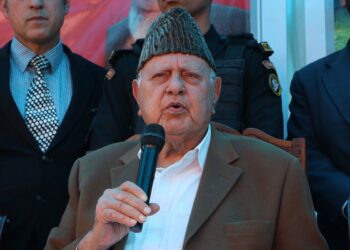
National Conference president Farooq Abdullah remarked on Wednesday that ‘Operation Sindoor’ has produced positive outcomes but emphasized that, ultimately, wars do not solve problems, they only exacerbate suffering. Abdullah made these comments during a press briefing held at the party headquarters in Srinagar.
“Operation Sindoor has paid its dividends. I think there is no more question of wars,” Abdullah stated. “Wars do not bring a solution; they just bring misery. Look at the devastation in Ukraine, and the persistent strife in the Middle East. The current situation regarding gas supplies demonstrates these consequences; it will take Qatar at least one to two years to restore its gas exports,” he elaborated.
Responding to inquiries about the ongoing situation in the Gulf, Abdullah predicted that the world currently lacks the appetite for war. He pointed to dire economic conditions globally as a significant factor. “Don’t panic; the world isn’t ready for war. The economic landscape of nearly every nation is precarious, and no one desires conflict. The Middle East possesses the majority of the world’s oil and gas; if ongoing pressure continues, the planetary situation could descend into a crisis that could threaten survival,” he cautioned.
On the topic of recent assembly election results, Abdullah commented, “I perceive the results as anyone else would. For instance, Mamata Banerjee disputes the outcomes, alleging massive rigging. This reflects the climate in Bengal. Meanwhile, Tamil Nadu appears to be welcoming a new government, Congress emerged victorious in Kerala, and the BJP succeeded in Assam. What more is there to consider?”
Addressing the impact of the special intensive revision (SIR) of electoral rolls, Abdullah acknowledged its significance: “There was an impact of everything.” He expressed confidence in the opposition INDIA bloc, asserting that it remains robust and ready for challenges.
When questioned about the recent blasts in Punjab, Abdullah downplayed their significance, stating, “Blasts have been occurring in India; this isn’t a new phenomenon. One should not panic.” His comments reflect an attempt to reassure the public regarding safety and stability.
In response to allegations against the National Conference government in Jammu and Kashmir, he noted that healthy opposition is essential for democracy. “If they don’t, how will they survive? Let them say what they want. Our party is working as it should, and we will continue to do so,” Abdullah asserted, emphasizing his party’s commitment to governance.
Abdullah’s comments come at a time when geopolitical climates remain tense. With conflicts raging across various parts of the world, his call for peace resonates strongly amidst a backdrop of fear and uncertainty. As the situation evolves, the voices of leaders like Abdullah may play a critical role in shaping public perception and policy.