

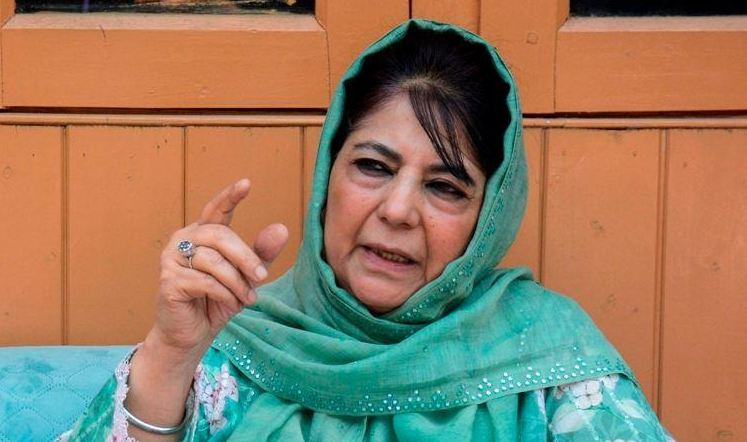
Peoples Democratic Party (PDP) chief Mehbooba Mufti recently addressed Prime Minister Narendra Modi’s video statement on forgiving the youth, contrasting their experiences in India’s diverse landscape. She emphasized that there exist two distinct Generation Zs in India: those with countless opportunities and the youth in Kashmir, who endure ‘inherited curfews and trauma’.
Mufti’s response came after Modi’s remarks on the students who used profanity against him in a protest at Jantar Mantar. She asserted that the Kashmiri youth do not require sympathy or charity, rather they demand equal opportunities.
“Hon’ble PM @narendramodi, there are two Gen Zs in India,” she tweeted. “One inherited opportunity; the other, in Kashmir, inherited curfews, crackdowns, internet shutdowns, lost classrooms, unemployment, and trauma. Kashmiri youth seek neither sympathy nor charity, only dignity, equal opportunity, political space, and the freedom to dream without fear.”
She continued, advocating for the rights of Kashmir’s youth, stating that if compassion is to be the cornerstone of India’s future, it should commence with Kashmir.
Mufti’s remarks resonate with broader discussions around the economic and social challenges faced by young people in conflict-affected regions. As the youth in Kashmir grapple with daily restrictions and a lack of resources, their counterparts in other parts of India enjoy ample access to education and employment. This disparity raises questions about the socio-political integration of Kashmiris within the national framework.
Experts believe that Mufti’s statements shed light on the ongoing struggle of Kashmir’s youth, emphasizing their lived realities over the symbolic gestures of forgiveness described by the Prime Minister. The concerns outlined by Mufti highlight the necessity for the government to engage meaningfully with the youth in conflict zones, addressing not merely the consequences of protests but the underlying issues that fuel dissent.
Political analysts suggest that the current discourse around youth mobilization is pivotal, particularly as Gen Z emerges as a significant demographic with the potential to influence socio-political landscapes. Engaging these voices more actively could bridge the gap between states and promote genuine understanding and inclusion.
As Kashmir navigates through its complex challenges, discussions led by figures like Mehbooba Mufti may pave the way for a more inclusive future. Addressing the acute sense of injustice that many young Kashmiris feel could foster a more peaceful and prosperous society.