

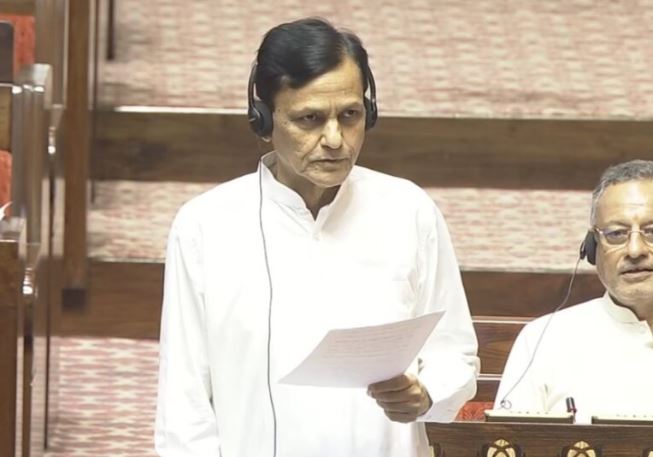
Delhi has seen an alarming rise in drug trafficking, resulting in the arrest of 254 foreign nationals since 2024. The government’s crackdown on this issue caught significant attention during a Lok Sabha session on Tuesday, revealing narcotics worth over ₹40.53 crore seized from these individuals.
Minister of State for Home Affairs, Nityanand Rai, provided these figures, highlighting the rising concerns over illegal drug activities in the National Capital Region. According to records from the Delhi Police, the arrests occurred across various localities, with prominent areas such as Khanpur Extension, Deoli, Sangam Vihar, and Mehrauli becoming hotspots for illegal narcotic activities.
The year-wise breakdown showed a decreasing trend in arrests, with 40 foreign nationals detained in 2024, followed by 35 in 2025, and only 15 in the first half of 2026. These figures raise questions about the effectiveness of ongoing law enforcement strategies.
Seizures included a range of drugs: heroin, cocaine, amphetamine, MDMA, methamphetamine, ecstasy, ganja, and charas. The estimated market value of these substances was pegged at ₹12.75 crore in 2024, ₹14.27 crore in 2025, and ₹13.50 crore for the first half of 2026.
Furthermore, investigations revealed that 103 foreign nationals had been residing in rented accommodation without mandatory tenant verification, putting a spotlight on the lax enforcement of residential regulations. The government has taken action against 63 landlords to curb this issue, signalling a push for stricter compliance.
In a significant disclosure regarding the government’s narcotics strategy, Rai outlined a detailed “Zero Tolerance” policy targeting drug traffickers. The National Narcotics Control Bureau (NCB) implements a technology-driven approach to dismantle drug trafficking networks, focusing especially on illegal operations conducted via online platforms and the darknet.
Cyber experts are now actively involved in investigating the sophisticated world of darknet-enabled drug trafficking and cryptocurrency transactions. The minister reiterated the crucial role of advanced technology in cracking down on these illegal operations.
The NCB’s Vision Document on Narcotics Control outlines ambitious plans, including creating dedicated Darknet and Cryptocurrency Cells in various Anti-Narcotics Task Forces. This initiative aims to leverage AI-enabled analytics and enhance inter-agency collaboration for effective dismantling of organized drug trafficking networks.
Additionally, specialized training programs on cyber-enabled narcotics investigations are underway. These programs celebrate collaborative efforts with the US Drug Enforcement Administration and Rashtriya Raksha University to equip professionals with necessary skills in the evolving landscape of drug trafficking.
Rai emphasized that the Vision Document lays out a three-year roadmap to combat drug trafficking comprehensively. Key initiatives include strengthening financial investigations, enhancing international cooperation, and promoting the Mission Drug Free Campus initiative in educational institutions.
This focused approach signals the government’s commitment to addressing the drug crisis using a holistic strategy that encompasses societal involvement, local enforcement, and high-tech intelligence. As drug trafficking networks grow increasingly sophisticated, the government aims to adapt and counteract effectively.