

23.5 C
Jammu
Thursday, September 17, 2026
spot_img

Madras High Court Declines to Quash Case Against City Union Bank Officials in ₹45-Crore Auction Scam, Orders Chargesheet Within Four Weeks
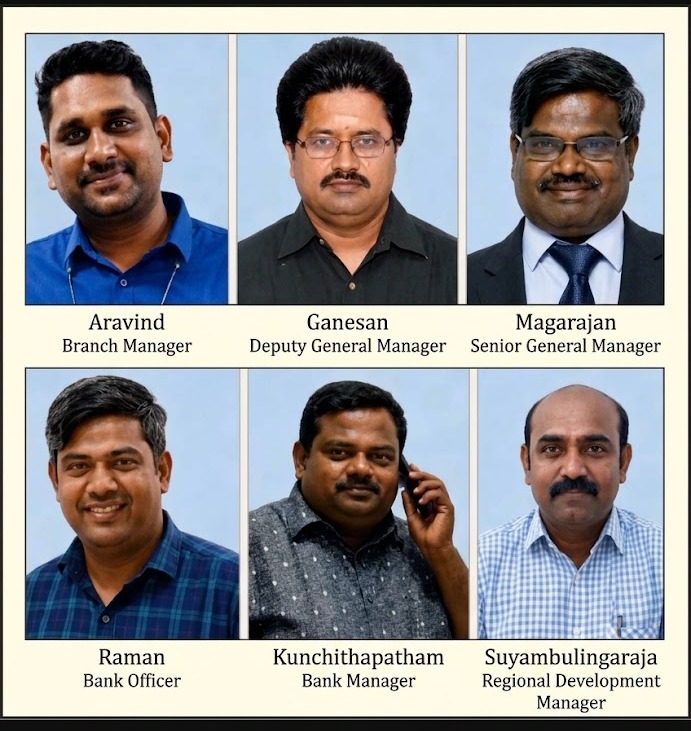
COIMBATORE — The Madras High Court has dealt a major setback to senior officials of City Union Bank facing allegations of orchestrating a ₹45-crore property auction fraud, outright rejecting a plea to quash the criminal case and ordering the Coimbatore Central Crime Branch to conclude its statutory investigation and submit a comprehensive chargesheet within four weeks.
The criminal proceedings stem from a complaint lodged in 2024 by Kesavapandian, a resident of Sivagangai district and director of apparel manufacturer Nature’s Touch Clothing Private Limited. According to the complaint, the firm had secured a credit facility from City Union Bank’s Tiruchengode branch. When the account slipped into non-performing asset status with an outstanding liability of ₹3.50 crore, the promoters remitted ₹2 crore toward settling the balance.
Despite this substantial repayment, bank officials allegedly engaged in deep-rooted document fabrication. Kesavapandian alleged that the officials forged his signature alongside the signatures of his father Murugan, mother Ponnuthai, and brother Arunpandian to manufacture counterfeit loan contracts and personal guarantee pacts without their knowledge or consent. Armed with these fabricated instruments, the bank approached the Debt Recovery Tribunal, falsely inflating the claim to ₹5.08 crore and securing an ex-parte recovery certificate behind the borrower’s back.
The primary objective behind creating the unauthorized liability allegedly lay in liquidating prime collateral. While the five mortgaged properties carried a collective market valuation of approximately ₹45 crore between 2015 and 2016, the bank offloaded all five assets in 2022 for a nominal sum of just ₹1.40 crore through a heavily compromised SARFAESI auction. In a glaring demonstration of deliberate undervaluation, one specific asset auctioned off for merely ₹56 lakh was pledged by the winning bidder to Indian Bank within 3 months, securing a fresh credit facility of ₹20 crore against that single property.
Following an inquiry, the Coimbatore City Central Crime Branch registered a formal first information report on November 14, 2024, booking six bank officials under charges of criminal conspiracy, document forgery, and cheating. The accused include Branch Manager Aravind, Bank Manager Kunjithapatham, Assistant Senior Manager Ganesan, Senior General Manager Maharajan, Regional Development Manager G. Swayambulingaraja, and Bank Officer Raman.
Seeking to halt the probe, Swayambulingaraja, listed as the fifth accused, approached the Madras High Court seeking to quash the proceedings. Although the bank’s counsel repeatedly assured the court that the original disputed loan documents would be submitted for scientific handwriting analysis by the Forensic Sciences Department, they consistently failed to surrender the physical records.
Dismissing the quash petition and vacating earlier interim protection, Justice D. Bharatha Chakravarthy observed that only an uninhibited police investigation could determine whether an unauthorized loan was papered over to conceal legacy non-performing assets from auditors or if the records were forged to misappropriate mortgaged properties.
Because serial legal challenges filed by the accused bank executives had stalled the probe for nearly two years, Kesavapandian moved a fresh plea seeking judicial intervention to expedite the case. Presiding over the matter, Justice Ilanthiraiyan pulled the brakes on further delay, issuing a strict directive to the Coimbatore Central Crime Branch to complete the probe and file a formal chargesheet within four weeks, setting the stage for a criminal trial.

Previous article
Three-Day Workshop on Mobile Journalism, Digital Storytelling and Mobile Film Making Organised at BGSBU Rajouri Rajouri: A three-day workshop on Mobile Journalism (MoJo), Digital Storytelling and Mobile Film Making was organised at Baba Ghulam Shah Badshah University (BGSBU), Rajouri, with the objective of providing students with practical, industry-oriented exposure to the rapidly evolving field of digital media and mobile-based content production. The workshop brought together students from the Department of Journalism and Mass Communication and the Tourism programme, providing an interdisciplinary platform where participants explored the growing use of smartphones and digital technologies in journalism, visual communication, tourism promotion, storytelling and filmmaking. The workshop was designed around three major themes, with each day focusing on a specialised area of contemporary media production. The sessions combined expert lectures, interactive discussions, demonstrations and practical assignments, enabling students to connect classroom learning with real-world media practices. Day One Focuses on Mobile Journalism The first day of the workshop was dedicated to Mobile Journalism, popularly known as MoJo. The sessions introduced students to the fundamentals of mobile journalism and highlighted how smartphones and other mobile tools can be effectively used for reporting, news gathering, photography and video production. Jamshaid Malik from Gulistan News and Shivam Bakshi from Punjab Kesari served as resource persons for the sessions. They shared their professional experiences and provided students with practical insights into the processes involved in mobile reporting and news gathering. The resource persons discussed various aspects of field reporting and mobile-based news production, while students also received practical guidance on using mobile devices more effectively for journalistic work. The day concluded with a practical assignment, giving participants an opportunity to implement the techniques discussed during the sessions. Day Two Dedicated to Digital Storytelling The second day focused on Digital Storytelling, an increasingly important component of modern journalism and communication. The sessions introduced participants to the fundamentals of digital storytelling, creative storytelling and visual narratives. Mohd. Aslam from Doordarshan conducted a session on the fundamentals of digital storytelling, while Shakti Pal from News18 shared insights into creative storytelling and visual narratives. The sessions emphasised the importance of developing a strong narrative, selecting appropriate visuals and presenting information in an engaging and meaningful manner. Students were encouraged to understand how stories can be transformed into effective digital content through the integration of text, photographs, video, sound and visual elements. For Tourism students, the session also offered valuable perspectives on how digital storytelling can be used to present destinations, cultural heritage, local communities and tourism experiences through engaging multimedia content. Day Three Explores Mobile Film Making The third and concluding day of the workshop focused on Mobile Film Making, covering the fundamentals of filmmaking, mobile cinematography and film production. Hasina Ma’am, Faculty Member at CMSR, conducted a session on the fundamentals of mobile filmmaking, while Viney Kesar of Rajouri Tribune addressed participants on mobile cinematography and film production. The sessions familiarised students with important aspects of filmmaking, including camera handling, framing, composition, camera angles, visual presentation and basic production techniques. Theoretical learning was complemented by a hands-on practical session, allowing students to experiment with mobile filmmaking techniques. The practical component enabled participants to understand how professional-looking visual content can be produced using readily available mobile technology when appropriate planning, framing and storytelling techniques are applied. Journalism and Tourism Students Participate Actively The participation of students from Journalism and Mass Communication as well as Tourism remained one of the significant features of the workshop. For journalism students, the programme provided practical exposure to mobile reporting, news gathering, digital storytelling and visual journalism. Tourism students, meanwhile, were introduced to digital tools and storytelling approaches that can be utilised for destination promotion, cultural documentation, travel content, heritage communication and tourism marketing. The interdisciplinary nature of the workshop created opportunities for students from both fields to learn from one another and understand the wider applications of digital media beyond traditional journalism. Danish Sir, Ghous Sir and Hasina Ma’am Play Vital Role The successful organisation and execution of the workshop was supported by the dedicated efforts of Danish Sir, Ghous Sir and Hasina Ma’am, who played a vital role in the planning, coordination and overall arrangements of the programme. Their efforts in organising and setting up the workshop, coordinating the sessions and facilitating the participation of students and resource persons contributed significantly to the smooth conduct of the three-day programme. Their involvement also helped create a constructive academic environment in which students could interact with media professionals, ask questions and participate in practical activities. Industry Exposure and Practical Learning One of the major highlights of the workshop was its emphasis on practical and industry-oriented learning. Instead of restricting the programme to theoretical discussions, the organisers incorporated practical assignments and hands-on activities to help students understand the actual process of creating media content. The interaction with professionals associated with organisations such as Gulistan News, Punjab Kesari, Doordarshan, News18 and Rajouri Tribune provided participants with an opportunity to gain insights into professional media practices and the changing requirements of the digital media industry. The workshop also highlighted the transformation taking place in journalism and communication, where mobile phones have increasingly become important tools for reporting, photography, videography, editing, storytelling and content distribution. Mohammad Aslam Khatana Anchors the Workshop Mohammad Aslam Khatana anchored the proceedings of the three-day workshop, facilitating the programme and maintaining the flow of the sessions throughout the event. His role included introducing the sessions and resource persons, coordinating the proceedings and engaging with the participating students during the programme. Strengthening Students’ Digital Media Skills The three-day workshop provided students with a comprehensive introduction to some of the most relevant skills in today’s digital media environment. From mobile journalism and news gathering to digital storytelling, visual narratives, cinematography and mobile filmmaking, the programme covered a wide range of practical areas. The initiative also reinforced the importance of combining academic knowledge with practical experience, particularly for students preparing for careers in journalism, media, tourism communication, digital content creation and filmmaking. The workshop concluded with participants gaining valuable practical exposure and a deeper understanding of how modern mobile technologies can be used to capture, create and communicate stories effectively. The initiative at Baba Ghulam Shah Badshah University, Rajouri, thus served as a meaningful platform for students to develop contemporary media skills, interact with industry professionals and explore new possibilities in the rapidly expanding fields of Mobile Journalism, Digital Storytelling and Mobile Film Making.

Related Articles

- Advertisement -spot_img

Latest Articles