

Jammu and Kashmir’s quest for restoration of statehood suffered twin blows during the year in the form of the Pahalgam terror attack and the Delhi car blast.
The elected government led by Chief Minister Omar Abdullah made all the right noises in the first six months in office for the restoration of statehood, but the deadly strike by terrorists on tourists on Baisaran meadows of Pahalgam on April 22 put a halt to any immediate talk of Jammu and Kashmir’s returning as a state.
Survivors alleged that the assailants chose their targets after confirming that they were not Muslims – a revelation that sent communal shockwaves to the rest of the country.
The attack was denounced widely across the valley.
For the first time in 35 years, spontaneous protests were held across the length and breadth of the valley in condemnation.
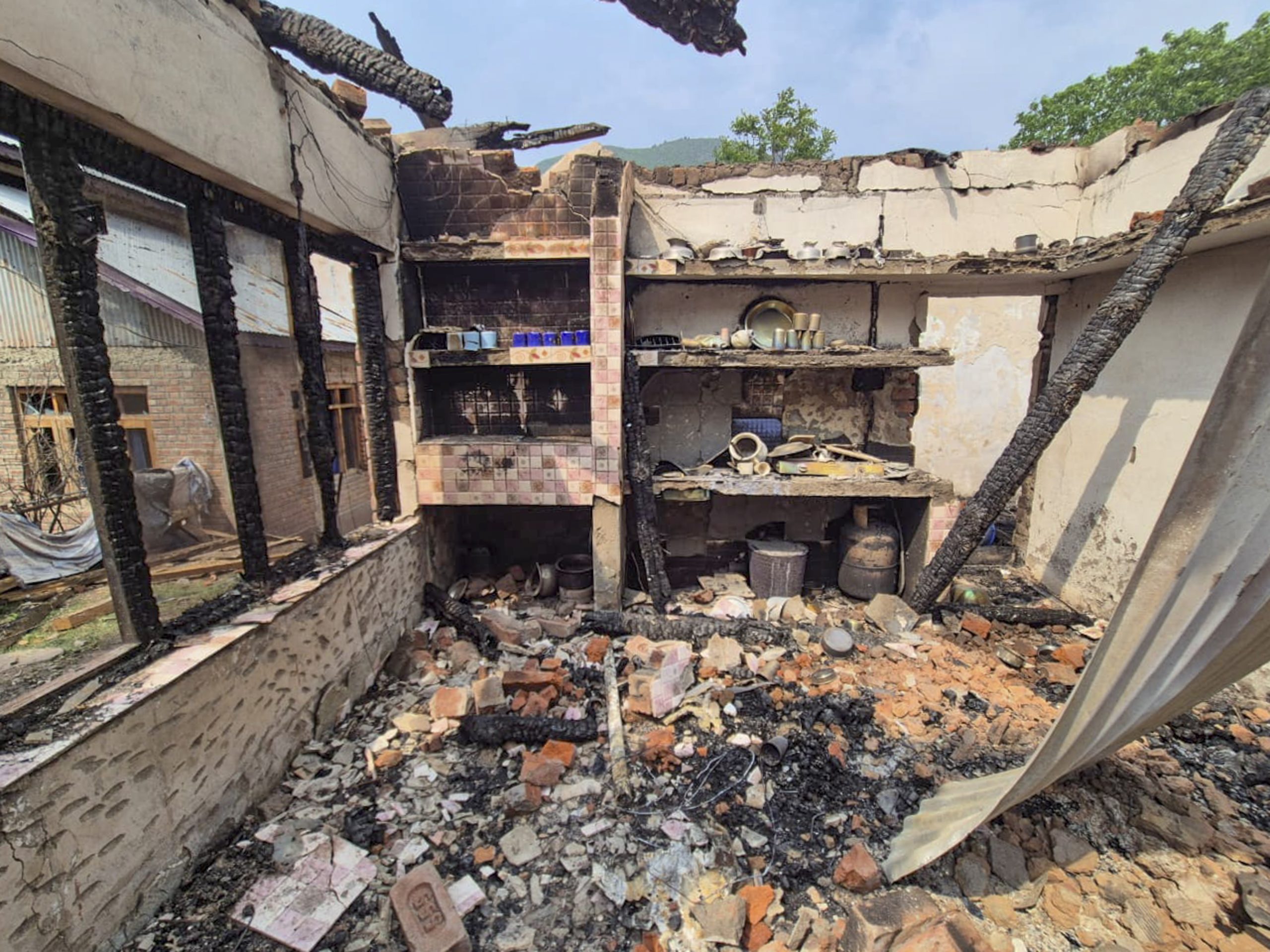
The protestors unequivocally declared: “Not in my name.” On May 7, the Indian forces launched cross-border strikes to avenge the massacre on the meadow. Its fallout was seen in the subsequent days, when border residents of the Union Territory were hit by shelling from Pakistan.
Poonch, Rajouri, Kupwara and Baramulla, all on the border, bore the most of the brunt of the enemy fire, which took 20 lives, destroyed over 2,000 structures, including three dozen schools.
On July 28, the government said, the perpetrators of the April 22 carnage were eliminated in Operation Mahadev in the Dachigam forest area in Harwan.
While it was still finding its bearings from the carnage, the backlash, and the bombing, Jammu and Kashmir was hit by a natural calamity.
On August 14, a cloudburst in Kishtwar of Jammu killed over 50 people.
Flash floods caused heavy damage to standing crops in many areas of Jammu as well as the Kashmir valley.
Jammu suffered the most as the Tawi River came into spate for the first time in more than a decade.
The flash floods also washed away a significant stretch of the Jammu-Srinagar National Highway, snapping road connectivity between Kashmir and the rest of the country for weeks.
The unearthing of the white collar terror module — highly educated men radicalising youths to join the terrorist ranks — came as a shocker with several doctors arrested in the first week of November during sweeping raids conducted by J-K Police with its counterparts in Haryana and Uttar Pradesh.
Massive quantities of explosives were seized from a Kashmiri doctor’s rented room in Faridabad in the National Capital Region, while weapons and other incriminating material were recovered from a medical college hostel in Anantnag district.
As the noose tightened around the culprits, one of the suspects — Dr Umar Nabi — was killed in a car blast near Red Fort Metro Station in Delhi on November 10.
According to investigators, the blast occurred while Nabi was trying to relocate the explosives in his possession. Ten people were killed, and scores were injured in the blast.
The 2,900 kilograms of explosive material seized from Faridabad was transported to Nowgam here as case property to be examined.
However, on November 14, the explosive was set off and ripped through the police station where it was kept, killing nine people.
Struck by violence and nature’s wrath, the Union Territory found itself grappling with a fund crunch. Tourism was the worst-hit.
The valley teemed with visitors for a good part of the first four months of the year, but the party came to an end with the April 22 attack. The Indo-Pakistan tension after Operation Sindoor also kept the tourists away from the valley.
The closure of nearly 50 popular tourist spots on security grounds after the Pahalgam attack, ordered by the lieutenant governor, ended all hopes of tourism revival this year.
While most of the tourist spots have since been reopened, the tourism sector has at best been limping back to its normal with sparse footfall.
The other mainstay of the Kashmir economy, horticulture, was dealt a blow due to the closure of the flood-hit Jammu-Srinagar National Highway at the peak of apple harvesting season. However, timely intervention by the Union Ministry of Railways ensured that the losses were kept to a minimum and the Kashmiri apples reached the terminal markets by train till the highway was restored.
The introduction of Vande Bharat — the direct rail link between Kashmir and the rest of the country — salvaged somewhat an otherwise bleak year for the Union Territory.
The train reduced the travel time and cost for people travelling to Kashmir.
The train has already been used to bring in food grain for the civilians and heavy-duty equipment for the armed forces. (Agencies)
Travel Guides & Travelogues